Picture this: Your doxie puppy has been home for an hour. The leash is still in the shopping bag, somebody wants to teach “sit,” and you’re trying to work out whether that little nose circling the rug means it’s time to go outside. If you’re wondering what to teach first, start with the things you and your puppy will do together every day.
In the first week, focus on a predictable routine, a response to their name, and a comfortable place to rest. Practice in short moments during the day. Use this plan as a starting point and repeat a step whenever your puppy needs more time.
Days 1–2: Make the first few routines easy to repeat
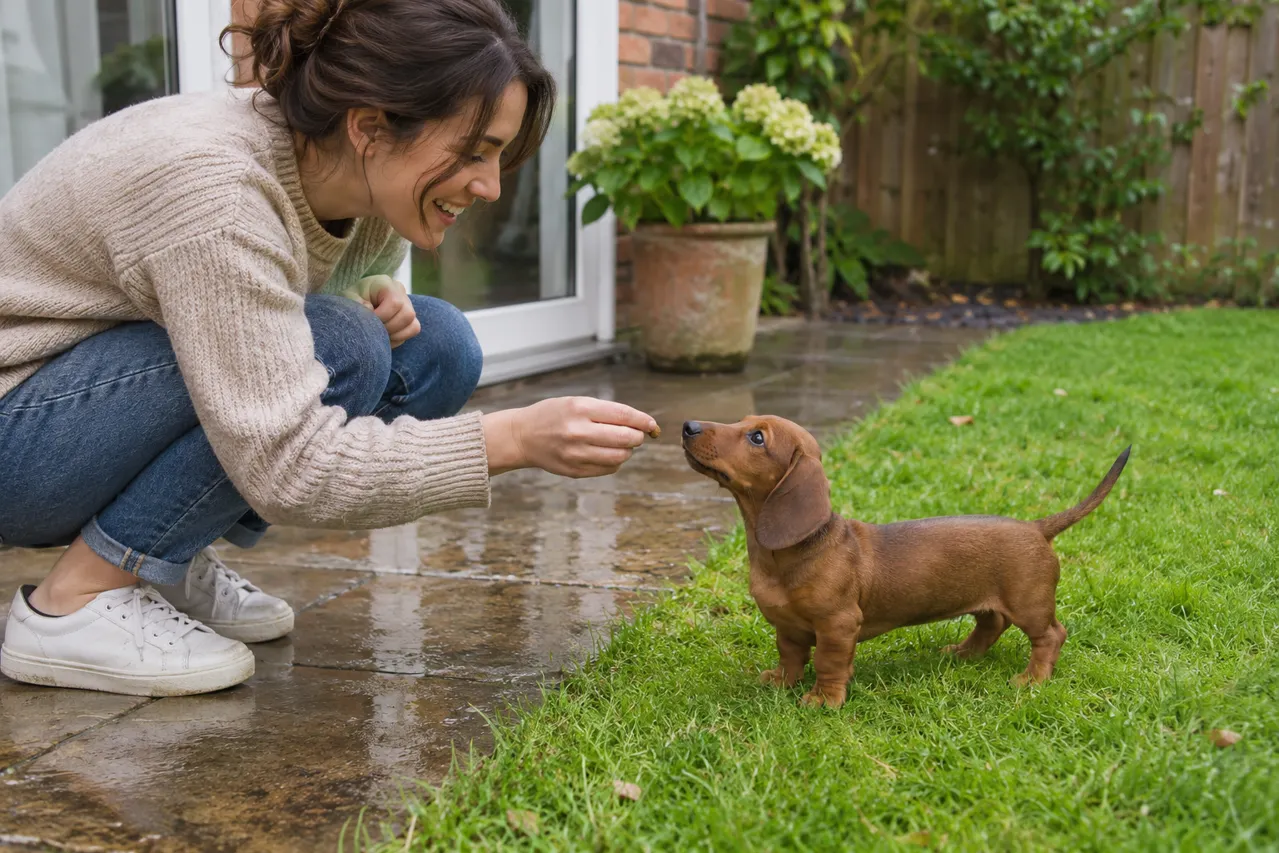
Pick a potty spot, a resting spot, and the door you’ll use to take your puppy out. Walk them to the potty spot after waking, eating, and playing. When they go, give the reward while you’re both still outside. Our dachshund potty-training guide walks through what to do when they sniff outside and then pee on the rug.
Choose a quiet spot where your doxie can rest without everyone reaching down to pet them. If visitors want to meet the puppy, start with a calm hello and give your puppy room to move away. Ask yourself: Which routine would make tonight easier for both of you? Start there.
Days 3–4: Teach your puppy to look up when you say their name
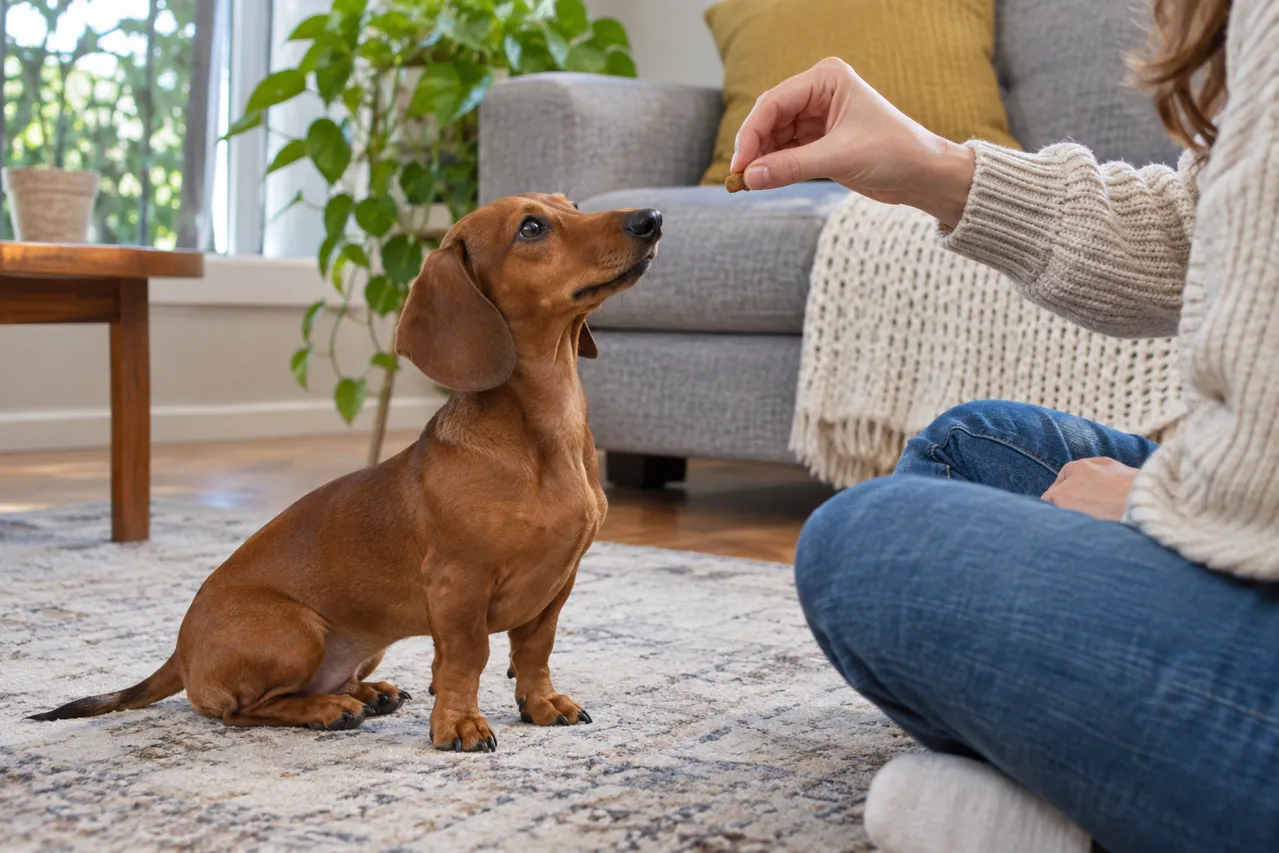
Try this while you’re sitting on the floor in a quiet room. Wait until your puppy looks away, say their name once, then say “yes” and give a small treat when they turn toward you. If they’re busy investigating a toy, put the toy away and try again in an easier moment.
Pick one time to practice, such as just before you put the dinner bowl down. Once your doxie turns toward you easily in that spot, try it in another quiet room. That gives you a clear next step when you’re wondering whether your puppy is ready to practice around more distractions.
Days 5–7: Practice settling beside you and try one new experience
Put a blanket beside your chair. When your puppy chooses to lie down and relax there, quietly place a small treat on the blanket. Try it while you read or watch TV, when the room is already quiet.
For a new experience, try one mild household sound from a comfortable distance. Let your puppy move away if they want. If they look worried, make the sound softer or end the session. Ask your vet which locations are appropriate for your puppy’s vaccination stage before practicing in places where unfamiliar dogs gather.
What should you practice next week?
Think about what still feels awkward. If your doxie looks up when you say their name in the kitchen but misses it in the living room, practice in the living room while it’s quiet. If potty trips are the sticking point, keep working on when you go out and what you do when your puppy comes back in without going.
Would it help to have a set of reward-based exercises you could follow in order? Our Brain Training for Dogs review for dachshund owners explains how the course approaches attention and everyday cues and points you to a free exercise. Try that exercise in the same quiet spot where you practiced their name and see whether the routine fits your household.
Picture this: You take your dachshund puppy outside, wait by the door, and come back in when nothing happens. A minute later, your puppy squats on the rug. It’s frustrating, especially when you just stood outside waiting. On the next trip, walk with your little doxie to the potty spot and keep a treat handy so you can reward them as soon as they finish.
To potty train a dachshund puppy, offer frequent trips to the same outdoor spot, reward your puppy right after they go, and supervise them closely indoors. Start with trips after waking, eating, and playing. If they come back inside without going, keep them in sight and try again shortly.
When should you take a dachshund puppy outside?
Take your puppy out first thing in the morning, after naps and meals, after play, and before bed. Offer breaks between those events, too. If your puppy pauses mid-play, starts sniffing or circling, or begins to squat, calmly take them to the potty spot.
Which break keeps getting missed? If you feed your puppy, clear the dishes, and then find a puddle, try taking them out as soon as they finish eating. If two people share potty duty, leave a note by the door with the time and either “went” or “didn’t go.” That tells the next person whether to try again shortly.
How do you reward a successful potty trip?
Go with your puppy to the same spot so you can see when they finish. Give a small treat right there. If they’re distracted and don’t go, return indoors, supervise closely, and take them back out shortly. Let them explore or play after a successful trip so going potty and coming back inside don’t have to happen together.
Try this on the next trip: Take a treat with you and stand beside the potty spot. If your puppy only sniffs, bring them back to the room you’re in and keep them in sight. If they start circling, head straight back out. When they finish outside, give the treat before walking back to the door.
What should you do after an indoor accident?
If you catch your puppy starting to go, calmly interrupt and take them outside. Reward them if they finish there. If you find the accident later, clean it with an enzymatic pet-odor cleaner and look at what happened before it. Maybe the game went longer than usual or someone thought the puppy had already been out. Adjust the next break based on what you notice.
What if your dachshund puppy won’t go outside in the rain?
Try a sheltered outdoor spot you can reach quickly. Stay with your puppy and reward them if they go. If they want to turn back without going, keep them in sight indoors and try again soon. Keep the same sequence you use on dry days so the routine stays familiar.
When should you call the vet about potty accidents?
Contact your veterinarian if your puppy suddenly starts urinating much more often, seems uncomfortable when urinating, or has blood in their urine. If they repeatedly strain and pass little or no urine, seek veterinary care immediately.
Would a structured puppy training course help?
What would make life with your little doxie easier next week? If the problem is coming inside before your puppy has gone, start with the routine above. If you’re also juggling basic cues and wondering which skill to teach next, a set of exercises you can follow in order may be worth a look.
Our Brain Training for Dogs review for dachshund owners explains what the course covers and points you to a free attention exercise. Try it and ask yourself: Can I picture practicing this with my puppy after dinner? That’s a useful way to decide whether you’d use the full course.
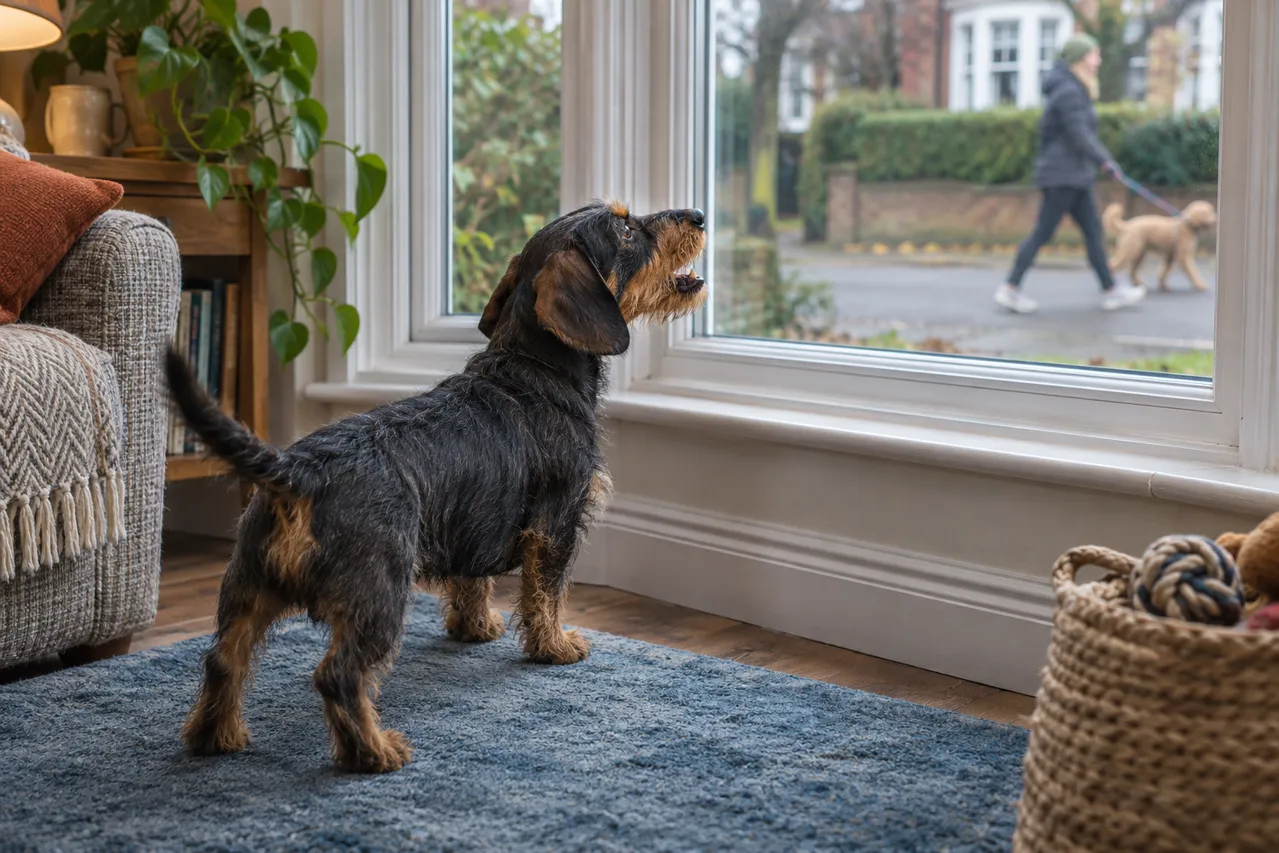
Picture this: You finally sit down after work. A car door shuts, and your dachshund races to the window. You call them back, they settle for a minute, and then someone walks past with a dog. Dinner’s getting cold and you’re already listening for the next bark.
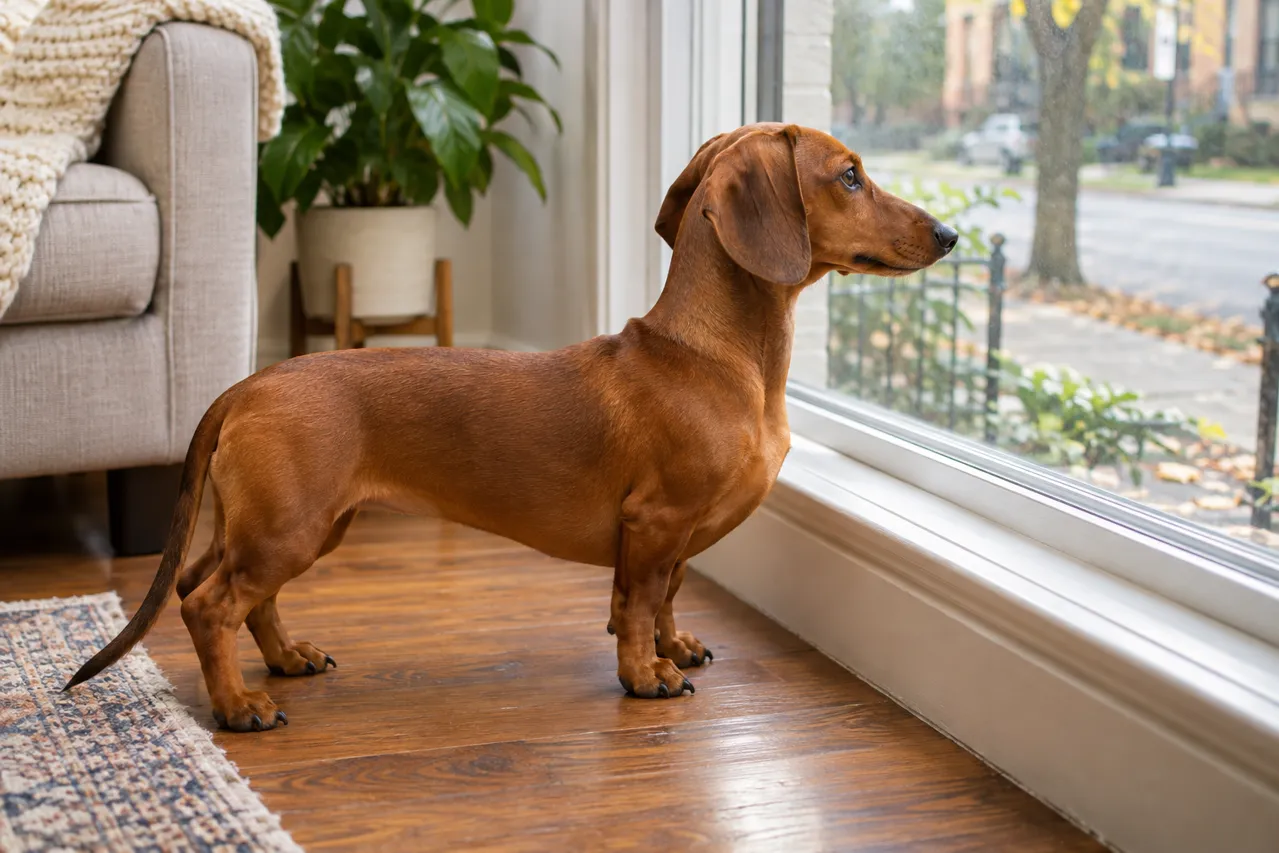
Outside sights and sounds can trigger window barking. If your dachshund reacts to people or dogs passing by, start by blocking the view. Then practice getting your dog’s attention in a quiet room.
Why does my dachshund bark at people and cars outside?
Think back to the last bark. Was it the dog your doxie could see, or the car door they could hear? Jot down what happened just before they barked and see what changes when you close the blinds. That gives you a starting point for the next time.
Three steps to manage dachshund window barking
1. Start with the window your doxie watches most. If that’s the one beside the couch, try closing those blinds first. Frosted window film or moving the furniture are other ways to block the view.
2. Practice a name response in a quiet room. Wait until your dog is looking elsewhere, then say their name. When they turn toward you, mark the response with “yes” and immediately offer a small treat.
3. Move to a quieter spot when your dog fixates on the window. If your dachshund tenses up or heads toward the glass, encourage them away from the window and offer a calm activity. Keep practicing the name response separately in a place where your dog can pay attention.
What if closing the blinds doesn’t stop the barking?
Your dog can still hear outdoor or hallway noise with the blinds closed. Try a radio at a comfortable volume to mask outside sounds, or guide your dog to a quieter space.
What should you track during practice?
Track one trigger at a time. For example, if your dog barks when another dog walks past, note whether they barked and how long the barking lasted. In a separate note, track whether they turn toward you when you say their name during quiet practice. That gives you two specific behaviors to observe.
When is a structured training program worth considering?
If you’d like a sequence of reward-based exercises to practice attention and everyday cues, read our Brain Training for Dogs review for dachshund owners. It explains what the course covers and how to try a sample exercise before buying.
Picture this: The first bark wakes you up. By the fifth, you’re wondering whether it woke the neighbors too. You call your dachshund away from the window, and for a second you think he’s coming. Then he hears something else outside.
Maybe you’ve tried a longer evening walk, saved a few training videos, or asked another doxie owner what worked for them. It’s easy to come away with five ideas and still wonder which one to try first. But the next time your dog is barking at the window, you’re still standing there in the dark wondering what you’re supposed to do differently.
Brain Training for Dogs is worth considering if you want a structured way to practice attention, basic cues, and indoor games with your dachshund. If window barking is your main concern, the attention exercises give you a place to start. The seller’s public materials give limited detail on specific triggers, such as footsteps in the hallway or people passing the front window.
If you had ten quiet minutes with your dog tonight, would you know what to practice? That’s where I see the value in Brain Training for Dogs. It gives you a system of reward-based games and exercises you can work through in order. You can start by practicing how to get your dachshund’s attention when the house is quiet, then see whether he can check in with you around small distractions.
After a long day at work, what would it be worth to sit down and finish dinner without getting up to call your dog away from the window? Or to sleep in on Saturday without the first car door on the street deciding when your morning starts?
Those are the moments I’d want to work toward. I’d consider buying the course if I wanted a clear training routine I could start tonight and come back to tomorrow. If my main goal were to address one specific barking trigger, I’d check how the course covers it before buying.
Affiliate disclosure: Doxie & Cue may earn a commission if you buy through links in this review.
Doxie & Cue reviewed the seller’s published course materials and public dachshund-owner discussions. We haven’t purchased or tested the full course. However, the real-life stories from dachshund owners below illustrate the training problems owners are trying desperately to solve.
What’s included in Brain Training for Dogs?
Brain Training for Dogs is Adrienne Farricelli’s online, reward-based training course. The seller describes 21 games, basic obedience exercises, written instructions with pictures, video demonstrations, and troubleshooting guidance. The site also offers a free sample exercise called The Airplane Game, which focuses on getting your dog’s attention. Course overview
You can find dog-training videos for free. The reason to pay is that you want an organized set of exercises you can work through and return to. There’s a difference between having six tips bookmarked and knowing what you’re going to practice with your dog after dinner.
Think about the last training video you saved. Did you try it more than once? Did you know what to do if your dog got distracted halfway through? If figuring out the next exercise is where you tend to lose momentum, the course’s structure is the part I’d pay for.
How does Brain Training for Dogs fit common dachshund training problems?
1. “He knows the cue. He just won’t do it when it matters.”
Picture this: you ask for a sit while you’re standing by the treat jar. Easy. Then you give the same cue while you’re putting on the leash, someone walks past the window, and your dachshund is already at the other end of the room. It feels as though you’re starting over, even though you saw him do it five minutes ago.
This is the clearest buying case for Brain Training for Dogs. You have a specific skill to work on: getting your dog to engage with you in more than one situation. An attention game gives you a starting point when the house is quiet. From there, you can see whether your dog will respond in another room or around a mild distraction.
What would make you feel like the training was paying off? Maybe it’s getting one glance back at you before he rushes to the window. Maybe it’s clipping on the leash without repeating the same cue six times. Pick a small moment you can recognize. It gives you a better way to judge whether the exercises are earning a place in your routine.
2. Can Brain Training for Dogs help with dachshund barking?
One dachshund owner described being jolted awake at 5 a.m. by intense window barking, even after trying evening walks and play. It’s a familiar kind of frustration: you’ve put in the time, you thought your dog was tired, and one sound outside was enough to set everything off again. r/Dachshund discussion
Can your dog still turn toward you when she first hears the sound, or is she already too worked up to engage?
If she can still check in, practicing attention in quieter situations gives you a skill to build on. If she goes straight into a long barking spell every time someone passes, you’ll also want a plan for that particular trigger. The seller covers excessive barking in its materials. For dachshunds who bark at hallway footsteps or people passing a front window, the public course outline gives limited detail on how to practice around those triggers. Course overview
I’d buy the course here if I wanted the foundation exercises anyway. I’d be more selective if the only thing I needed was a detailed plan for one recurring barking trigger.
3. “By evening, my dog wants something to do and I’m out of ideas.”
A dachshund who has already had a walk can still spend the evening inspecting the laundry basket, nosing open a door, or bringing you the same toy until you finally put your phone down. If that sounds like your house, would you actually enjoy having a few structured games to pull out during the week?
This is another good fit for the course. You don’t have to wait until there’s a behavior problem to use an enrichment exercise. You can pick one game, make it part of your evening, and get a sense of which activities your dog is keen to repeat. Video demonstrations can be useful if you’d rather watch where the trainer puts her hands and how she delivers a reward than interpret written directions on the fly. Course overview
4. “We were doing fine with potty training until it rained.”
One owner described a puppy who was doing well with house training until a rainy morning ended with an indoor accident. Other owners described dogs turning right back around once they realized the ground was wet. If your dog goes outside reliably on dry days, you’ve already learned something about where the routine breaks down. Rainy-day discussion · Related owner discussion
The seller says the course addresses potty training. For rainy-day accidents specifically, I’d first work on making the outdoor routine easier to repeat, such as using the same sheltered spot and rewarding your dog right after they go outside. If you’re also looking for help with everyday cues and want more activities to practice, that’s a better case for buying the broader program. Seller’s course site
Pros and cons for dachshund owners
What I like
What to weigh before buying
The course gives you a set of games and cue exercises to work through, which helps if you’ve been jumping between tips.
It’s a general dog-training course, so you’ll need to adapt the exercises to your dog and what happens in your home.
Written directions and video demonstrations give you two ways to follow the exercises.
The public materials give limited detail about how the course handles specific barking triggers.
The free Airplane Game lets you preview the teaching style.
A self-paced course is most useful if you can make time to practice the exercises repeatedly.
Can you try Brain Training for Dogs before buying?
Yes. Start with the free Airplane Game and pay attention to whether you understand what you’re supposed to do and can imagine practicing it again tomorrow. That tells you something about how you’d use the course. How your dog responds to one exercise in a quiet room tells you much less about how they’ll respond at the front window. Free Airplane Game
Final verdict: Would I buy Brain Training for Dogs for a dachshund?
Yes, if I wanted a program I could open after dinner and know what to practice. I’d buy it for attention games, cue practice, and more ways to engage my dog indoors. The owner I’d recommend it to is the one thinking, I’ve tried a bunch of tips. I’d rather follow one program for a while and see how far we get.
If you’re on the fence, think about what you’d do the first evening after buying it. If you can picture trying an attention exercise in a quiet room and coming back to it a few times that week, you have a concrete reason to buy. And the next time your dachshund hears the delivery truck, you’ll know exactly what skill you’re working toward.